Kung fu's biggest problem might be kung fu. I don't mean the art itself. I mean the way we've named it, organized it and argued about it. If traditional kung fu wants to be taken seriously, we have to be willing to look at ourselves first.
"Kung fu" covers too much
When people say kung fu, they're talking about hundreds of different styles. There's no shared standard, no common set of techniques or forms, and honestly, nobody is in charge. So when somebody tells me kung fu doesn't work, my first question is: which one? Writing off all of Chinese martial arts in one sentence isn't honest, and it isn't fair.
It's also why you'll probably never see traditional kung fu in the Olympics. Wushu is about to make its debut at the Youth Olympic Games in Dakar, but that's contemporary wushu, set routines scored by judges. Traditional styles are too different from each other to be judged that way.
You can see it even at traditional tournaments. The Wing Chun (詠春) player ends up in the same ring as the Hung Gar (洪家) player, and those two styles barely look alike. Most events don't get enough entries to give each style its own division, so the Hakka (客家) styles like Southern Mantis (南螳螂, Nam Tong Long), Bak Mei (白眉) and Lung Ying (龍形), the dragon style, rarely get a corner of their own. Everybody gets lumped together, even though the styles are completely different.
Even the name is confusing
Most of us know that kung fu (功夫, gung fu) doesn't actually mean martial arts. It means skill that you build through hard work over a long period of time. One of my best friends growing up had a dad who was a chef. He had good kung fu in the kitchen, and the cooks in the back called him Sifu (師父). Sifu is a craftsman's title. It isn't reserved for martial arts.
The real word for Chinese martial arts is wushu (武術), or mo seut in Cantonese. But today wushu usually means contemporary wushu, the performance sport that blends kung fu with acrobatics. So now we have to say "traditional wushu" just to be clear. There's also guoshu (國術, gwok seut in Cantonese), which means national art. Kung fu is the name that stuck, and Bruce Lee had a lot to do with that.
And the truth is that brand recognition matters. If you run a school, people have to know what it is and how to find it. The average person knows the word kung fu, but they don't know Hung Gar or Choy Li Fut (蔡李佛). Half the time when I tell someone my style is Hung Fut, the people who know a little say, "Oh, you mean Choy Li Fut?" The people who know a little more say, "So it's Hung Gar plus Fut Gar?" It's neither.
Shaolin Hung Fut Kung Fu (洪佛派, Hung Fut Pai) goes back to a monk named Wun Lei (雲彌) in the mid-1800s. He learned an old Buddhist palm system, Fut Jeong (佛掌), from his father, and he trained Hung Kuen (洪拳) with Hung Hei Goon (洪熙官). The story goes that he watched two eagles fighting above the Cing Waa Temple (青華寺) and saw hard and soft working together. He brought those two older arts together into one system, and that's where Hung Fut starts. That's a lot to explain to somebody in one conversation, which is why I've started leading with the full name of my style.
Too much curriculum
A lot of styles have more forms than anyone could ever make work. Students spend years chasing the next form and never stay with one long enough to be able to use it. Two forms you can actually use and pressure test are worth more than ten forms you can only perform.
Even in my own lineage, the curriculum grew one generation at a time. Wun Lei didn't start with everything we teach now. Each grandmaster added something, and by the time it reached my Sifu, there was a lot of it. That's a gift. It's also a trap if you think you have to learn all of it before you're allowed to fight.
In the school I grew up in, if you made it to our fourth form, people figured you had to be a little crazy, because almost nobody got that far. That's not good for student retention, but it's great for the standard. I feel blessed that I got to train alongside my sihing and sije (師兄, 師姐), the older brothers and sisters in the school, who held that standard.
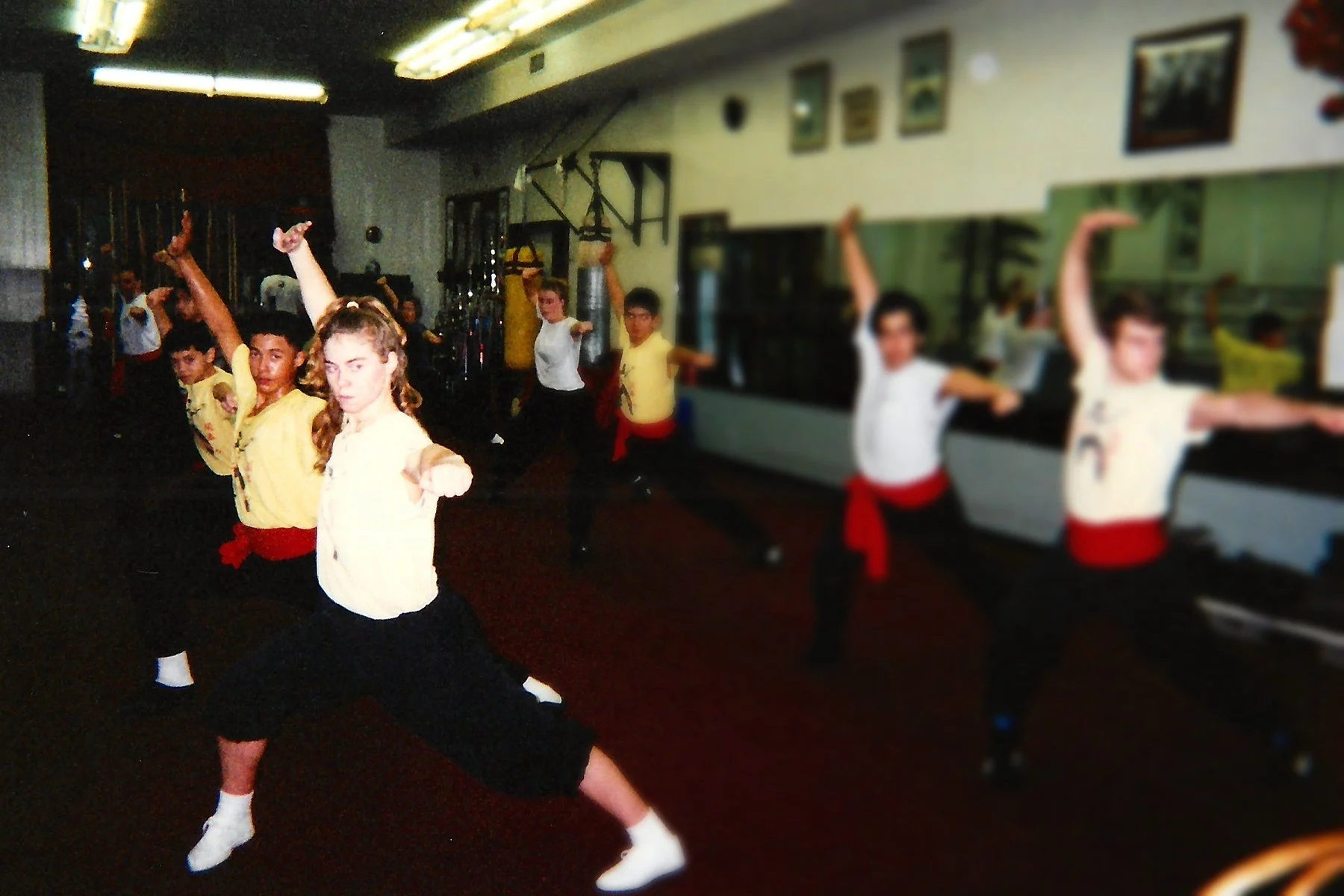
Tai Yim Kung Fu School, Wheaton, Maryland, 1996. I’m right behind my Sije Tracie.
Secrecy
Some of the secrecy made sense. Families had to protect their styles. My own lineage has a weapon like that. The Mad Devil Staff (瘋魔棍, fung mo gwan) was traditionally passed down only to the next heir of the system, and I respect that.
But secrecy has a cost. Our sixth generation grandmaster, Bak Mo Chiu (白毛照), was known for a palm skill called the Yin Cruel Skill (陰殘功). We still know its name and what it did. How it was trained is gone. That's what secrecy usually leaves behind today: lost forms and lost applications.
If I could teach you to throw a Hadouken, then maybe I'd keep that one to myself. But right now you can go online and learn almost anything about Muay Thai or BJJ, and those schools are doing just fine. They're thriving.
We fight each other harder than anybody
Then there's the hating. Some of it is earned. Call out schools with abusive behavior and cult-like environments. Call out the guy doing no-touch knockouts. That's fair.
I'm talking about the petty stuff. Traditional martial artists can get so obsessed with styles, lineage, titles, and who taught who. "Mine is the true style." "No, yours isn't." Can any of us actually fight? What are we arguing about? Let's just get better.
My Sifu showed me there's another way. In August of 1993 in Baltimore, he helped found the USA Wushu-Kungfu Federation, the first national governing body for kung fu in this country, and served as its senior vice president. He sat on that board with teachers from completely different styles. Nobody had to give up their own style to work together.
I still believe truth matters, and I care about history a lot. But so much of our history is wrapped in mythology and folklore that we can't even agree on whether there was a Southern Shaolin Temple (南少林, Nam Siu Lum). And here's the hard truth: outside of our own circles, nobody cares.
Not one parent has ever asked me who my teacher was or what my lineage is. They want to know if I'm going to serve their family well. Will their kids learn focus and discipline? Will I teach them something practical that helps them grow mentally, physically and spiritually?
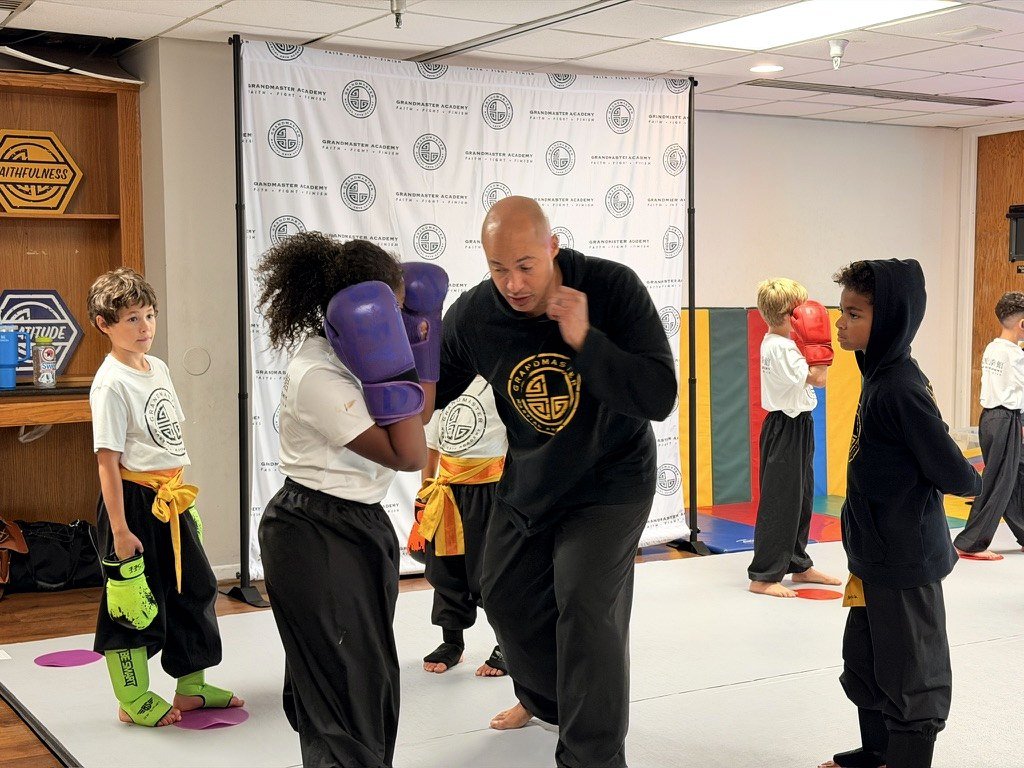
Coaching sparring with my students today.
Hate can be a powerful motivator for a while, but it doesn't last, and it shouldn't be what drives martial artists. We can honor the past and still work hard to do our best today. What matters is the value each of us, and each school, actually brings to the community and the families we serve.
Looking inward
None of this is kung fu's fault. The art is fine. These are our problems, the problems of the people who teach it and train it. If we want kung fu to survive in this era, we have to be willing to look at ourselves, our schools and our styles, and see where we can do better.
So what do you think kung fu needs to do to survive? I'd love to hear it.
Keeping Kung Fu Martial
I put my Sifu's principles and the step-by-step method I use to take a technique from the form to a real fight into a free guide. Get the free Keeping Kung Fu Martial guide here.